
Ships operate in one of the harshest environments an electrical cable can face—heat, constant vibration, oil contamination, humidity, salt spray, and fire risk. A cable built for a building or a factory simply isn’t designed to survive these conditions. That’s why marine cable is a distinct product category, engineered to meet strict international safety and performance standards.
A properly specified marine cable must be:
- Flame retardant
- Fire resistant (where required)
- Low smoke, zero halogen (LSZH)
- Resistant to oil and chemicals
- Resistant to moisture and salt water
- Flexible and mechanically strong
- UV and weather resistant
Each of these properties protects the vessel, its systems, and its crew. Below, we break down what each one means and why it matters.
1. Flame-Retardant Marine Cable
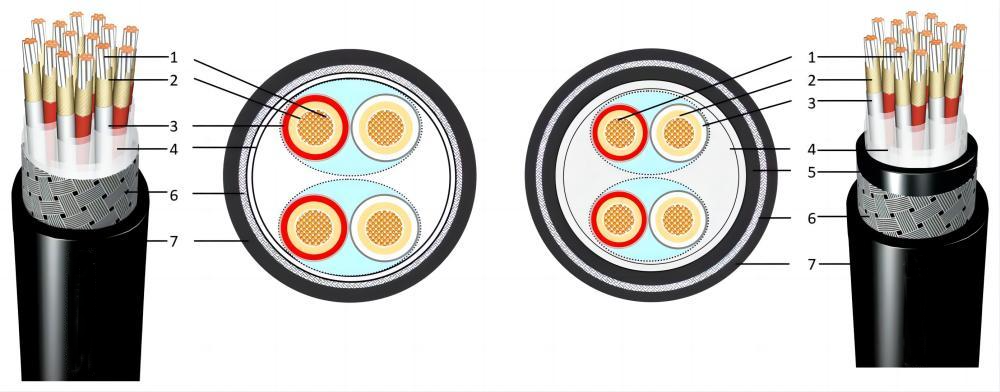
A flame-retardant marine cable is designed to stop fire from spreading from one cable to another. On board a ship, hundreds of cables often run together in the same cable tray or trunking. If one cable ignites, a flame-retardant construction prevents the fire from racing along the tray to other circuits.
This property is typically verified against standards such as IEC 60332 (tests for vertical flame spread on single or bunched cables). Flame-retardant cable protects machinery control systems, distribution circuits, and—most importantly—the crew’s ability to safely evacuate.
2. Fire-Resistant Marine Cable
Fire-resistant cable goes a step further: it is designed to keep supplying power for a defined period of time even while actively burning. This is a critical distinction:
Flame retardant = stops fire from spreading. Fire resistant = keeps functioning during a fire.
Fire-resistant cables (commonly tested to IEC 60331) are used exclusively for safety-critical and emergency circuits, including:
- Emergency lighting
- Fire pumps
- Fire detection and alarm systems
- Navigation lights
- Emergency generator circuits
- Emergency communication systems
3. LSZH: Low Smoke, Zero Halogen
Modern marine cables are increasingly specified as LSZH (Low Smoke, Zero Halogen). In a fire, standard PVC-type cables release thick smoke and toxic, corrosive halogen gases—both of which endanger crew evacuating through smoke-filled passageways and can corrode nearby electrical and electronic equipment.
LSZH cable produces significantly less smoke and no halogen acid gas, which is why it’s the preferred choice for:
- Accommodation areas
- Engine rooms
- Control rooms
- Escape routes and stairwells
4. Sheath and Insulation Materials
The outer sheath is the cable’s first line of defense against the shipboard environment. Cables regularly contact fuel, diesel, lubricating oil, hydraulic oil, grease, and cleaning chemicals—so the sheath must resist all of them without softening, swelling, or cracking.
Three sheath materials dominate the market:
| Sheath Material | Common Use Case |
|---|---|
| PVC (Polyvinyl Chloride) | General-purpose, cost-effective applications |
| LSHF Thermoplastic Polyolefin | Improved fire safety, reworkable/re-terminable |
| LSHF Thermoset Polyolefin | Higher thermal and chemical resistance, non-remeltable |
If insulation degrades from oil exposure, the result can be insulation failure, an earth fault, or a short circuit—so oil and chemical resistance is directly tied to the electrical safety of the vessel.
5. Moisture and Salt Water Resistance
Ships operate in a permanently humid, salt-laden atmosphere—condensation, sea spray, and salt-air corrosion are constant factors. Marine cable insulation and sheathing must resist water ingress, because a drop in insulation resistance can lead to:
- Leakage current
- Earth faults
- Short circuits
- Equipment failure
Correct cable glands, sealing arrangements, and routine maintenance are just as important as the cable’s own construction in keeping moisture out.
6. Flexibility and Mechanical Strength
On board, cables are subject to vibration, repeated bending, pulling forces, and physical impact—so both flexibility and mechanical robustness matter.
Flexible cable: For portable equipment, moving machinery, and any installation requiring frequent bending, the conductor construction matters. Per IEC 60228, conductors are classified from Class 1 (solid) to Class 6 (extra-flexible); Class 5 is the standard choice for flexible marine cable.
Armored cable: Where crushing, impact, or pulling forces are a risk, armored marine cable adds a protective layer. The two common armor types are
- Copper or tinned copper wire braid
- Galvanized steel wire braid
7. UV and Weather Resistance
Cables installed on open decks are exposed to direct sunlight, rain, wind, and temperature extremes. Without UV stabilization, the outer sheath can harden and crack over time—creating a path for moisture ingress and eventual insulation failure. Marine cable intended for exposed, outdoor, or open-deck installation should always be specified as UV- and weather-resistant.
Types of Marine Cable
| Cable Type | Typical Application |
|---|---|
| Power cable | Motors, pumps, heaters, machinery |
| Control cable | Control circuits, starters, alarms, automation |
| Instrumentation cable | Sensor and measurement signal transmission |
| Communication cable | Telephone, data, and communication systems |
| Fire-resistant cable | Emergency and life-safety circuits |
| Armored cable | Installations requiring mechanical protection |
| Flexible cable (IEC 60228 Class 5) | Portable and moving equipment |
Conclusion
Marine cable is engineered for one purpose: to keep power, control, and communication running safely in one of the toughest operating environments in the world. A reliable marine cable must resist fire, smoke, oil, chemicals, moisture, salt water, vibration, sunlight, and mechanical stress—all at once, for the life of the vessel.
Choosing the correct cable specification—and maintaining it properly—is essential to preventing electrical faults, fire hazards, and costly machinery breakdowns.
Jaspore is a trusted marine cable supplier, offering professional, standards-based guidance for selecting the right cable for your project. Contact us by phone or WhatsApp with any questions about marine cable specifications.